.png)
What is CARE?
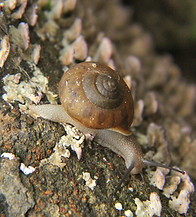
Neohelix albolabris, Eastern Whitelip Snail
𖡡 Table Rock State Park, Pickens, South Carolina
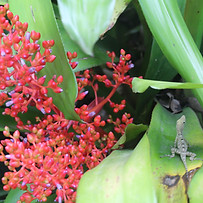
Anolis stratulus, Banded Anole
𖡡 Phantasea Tropical Botanical Garden, St Thomas, USVI
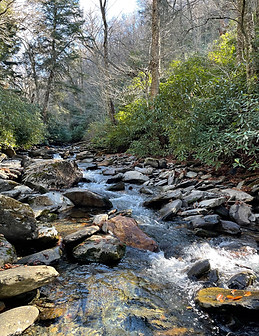
Creek
𖡡 Great Smoky Mountains National Park
C.A.R.E.
is a living, growing, emerging ecosystem shaped through curiosity, connection, and collaboration between human and more-than-human communities.
C.A.R.E.
is an invitation to offer care for ourselves and each other, and the Earth we belong to, as we explore pathways toward more reciprocal relationships.
COME
inside and sit, dance, hold, and resist within this ecosystem. Together, we will retrace our interconnected web, disrupt and resist the extractive and exploitative models, and cultivate C.A.R.E.
Mediums

Learning
Listening with intention to ourselves, our bodies, one another, and the living world. We stay curious about what we need, what we can learn, and what we want to see grow.
guided hikes · nature walks · skill sharing · conversations · place-based learning
Creating
Giving form to what is emerging by allowing ideas, feelings, relationships, and possibilities to settle, take shape, and blossom into expression.
brainstorming sessions · art · storytelling · experiments · collaborative projects
Connecting
Building relationships across people, ideas, places, and perspectives. We share what we know, make room for each other, and find where our paths meet.
community gatherings · shared meals · collaborations · conversation circles · cultural exchange · mutual support · shared experiences
Reflecting
Making room to sit with what we experience, notice what it teaches us, and let it shape what comes next.
nature sits · embodiment · meditation · reflection circles · journaling · observation practices
Embodiment informed by the work of Prentis Hemphill
Lindbergh Bay
𖡡 St. Thomas, USVI
Influences
Rev. angel Kyodo williams
Writer, activist, ordained Zen priest
"Not because we are friends or lovers or because we share a common social network, but because we know and share a common knowledge that the personal is political, but the impersonal is powerful. Our greatest liability is thinking we have to go it alone. That we should trust no one. That no one gets us, or our struggle."
― Radical Dharma: Talking Race, Love, and Liberation by Jasmine Syedullah, Lama Rod Owens, and angel Kyodo williams
Prentis Hemphill
Author, Co-Founder of The Embodiment Institute (TEI)
“Feeling is revolutionary, a disruption of the status quo. Though it feels personal and happens in our bodies, it doesn't need to be a solitary action. Feeling and connection bring us into the world and into relationship with one another. Some things seem too big to be felt alone because they are. They require the collective to hold the space for big feeling, for it to move through, and to remind us that we’re not alone. It’s not practical to imagine that we can feel the weight of historical trauma as one person. This is why we meet in the streets. As much as mass protests and direct action are about putting strategic pressure on opposition, they are often a gathering space for grief and pain because they are too big to feel alone. Protests don’t get reported on this way, as an eruption of collective grief; on the news they are riots, and we begin the cycle of minimizing the feelings that bring people to the streets, and ultimately miss the message. We need those spaces and others, too, where our grief can swell, where feeling for feeling’s sake can reconstitute us, where our empathy for one another can build. A community, a society, becomes one, remains one, I think, through shared feeling.”
--
“Malcolm X is this: “We need more light about each other. Light creates understanding, understanding creates love, love creates patience, and patience creates unity.”
― What It Takes to Heal: How Transforming Ourselves Can Change the World by Prentis Hemphill
Angela Davis
Philosopher, scholar, author, Black Panther
“Everyone is familiar with the slogan "The personal is political" -- not only that what we experience on a personal level has profound political implications, but that our interior lives, our emotional lives are very much informed by ideology. We oftentimes do the work of the state in and through our interior lives. What we often assume belongs most intimately to ourselves and to our emotional life has been produced elsewhere and has been recruited to do the work of racism and repression.”
“It is in collectivities that we find reservoirs of hope and optimism.”
― Freedom Is a Constant Struggle: Ferguson, Palestine, and the Foundations of a Movement by Angela Davis


Connect
Speak With Us
Please reach out with inquiries, to learn more about advocacy efforts, or how you can C.A.R.E. with us